

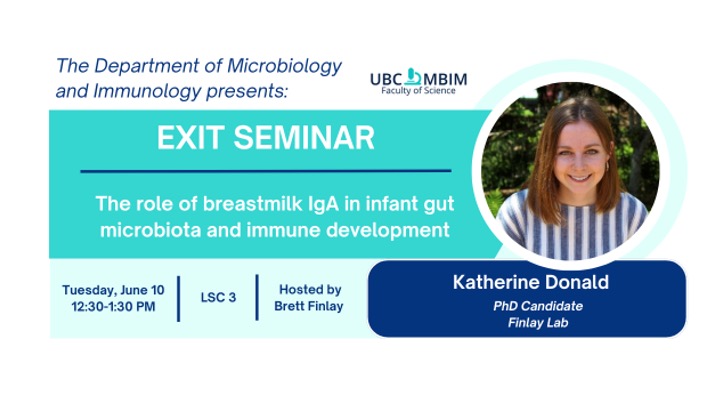
Seminar: The role of breastmilk IgA in infant gut microbiota and immune development
Abstract: The gut microbiota is highly dynamic in the first year of life and plays a vital role in immune development. Dysbiosis in the early-life gut microbiota has been linked to numerous immune-mediated diseases, including allergies and asthma. Secretory IgA (SIgA) is the most abundant antibody in the gut, and a key determinant of gut microbiota composition. During the first months of life, infants are not able to produce SIgA, receiving it instead through breastmilk. Breastmilk SIgA is known to protect infants against infections previously encountered by the mother, but the effects of this antibody on infant gut microbiota composition and thus immune development have not been defined. Using a mouse model of SIgA deficiency, breastmilk samples and longitudinal data from the CHILD cohort study, and cell culture models, my work defines the role of breastmilk SIgA in guiding infant immune development and protecting against allergic disease by modulating the early-life gut microbiota.
LSC 3 (Life Sciences Institute - 2350 Health Sciences Mall) MBIM itsupport@microbiology.ubc.ca America/Vancouver publicSeminar: The role of breastmilk IgA in infant gut microbiota and immune development
Abstract: The gut microbiota is highly dynamic in the first year of life and plays a vital role in immune development. Dysbiosis in the early-life gut microbiota has been linked to numerous immune-mediated diseases, including allergies and asthma. Secretory IgA (SIgA) is the most abundant antibody in the gut, and a key determinant of gut microbiota composition. During the first months of life, infants are not able to produce SIgA, receiving it instead through breastmilk. Breastmilk SIgA is known to protect infants against infections previously encountered by the mother, but the effects of this antibody on infant gut microbiota composition and thus immune development have not been defined. Using a mouse model of SIgA deficiency, breastmilk samples and longitudinal data from the CHILD cohort study, and cell culture models, my work defines the role of breastmilk SIgA in guiding infant immune development and protecting against allergic disease by modulating the early-life gut microbiota.