

Shifting ocean conditions can influence the species forming both the oyster’s external ecosystem and internal community of microorganisms.
By Sarah Anderson, PhD
Although they don’t produce the shiny, precious pearls of some of their mollusk family members, Pacific oysters remain a critically valuable resource. The Pacific oyster acts a natural water filter as it feeds, sucking algae and phytoplankton from up to 50 gallons of water per day. The oyster reef also provides a key aquatic habitat that supports a range of fish and invertebrate organisms. And as the most widely farmed species of oyster, the Pacific oyster industry forms the financial backbone of coastal communities spanning Vancouver Island to Vietnam.
Recently, Pacific oysters have undergone a series of mass mortality events, leading to devastating ecological and economic consequences. In the past few years, death rates have regularly exceeded 50 percent in Pacific oysters farmed in Baynes Sound, British Columbia during July and August. Given the seasonal trend, scientists have hypothesized that ocean warming and acidification due to climate change may be at play.
Curtis Suttle, a professor of microbiology and immunology, earth, ocean, and atmospheric sciences, and botany, wondered if shifting environmental parameters may affect the Pacific oyster via its microbiome. As the Pacific oyster filter feeds and interacts with its marine ecosystem, it builds up a microscopic ecosystem of its own — a complex community of bacteria, fungi, and other microorganisms inhabiting its gut and gills. As these microorganisms have evolved to perform important biological functions under specific conditions, increasing water temperature and acidity could disrupt the oyster’s microbiome and impact its health.
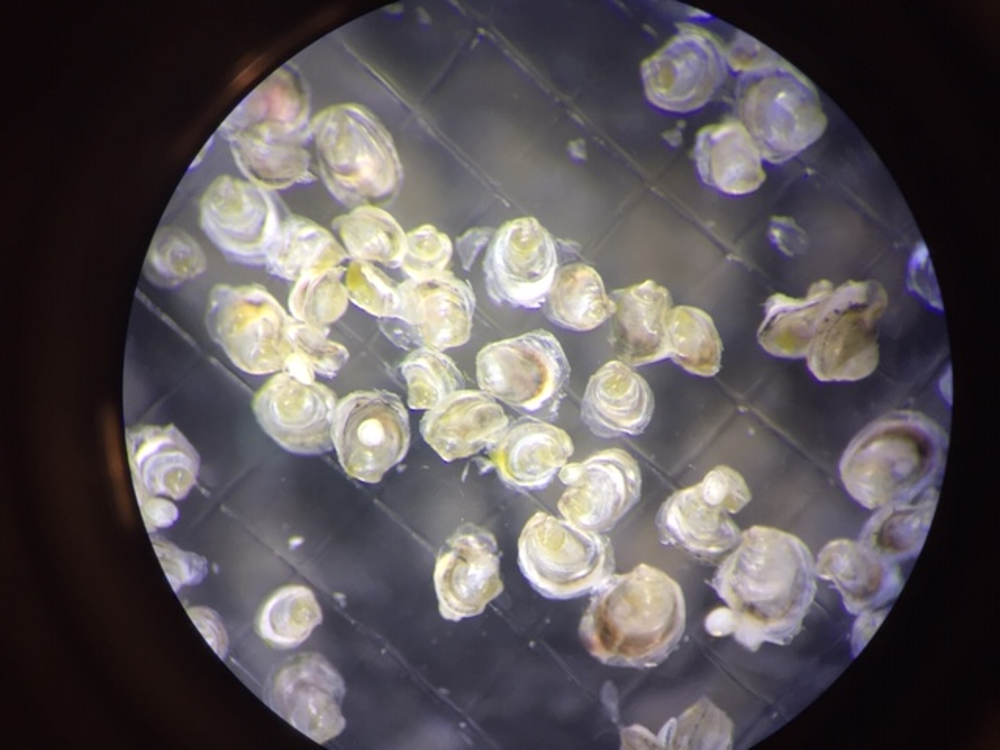
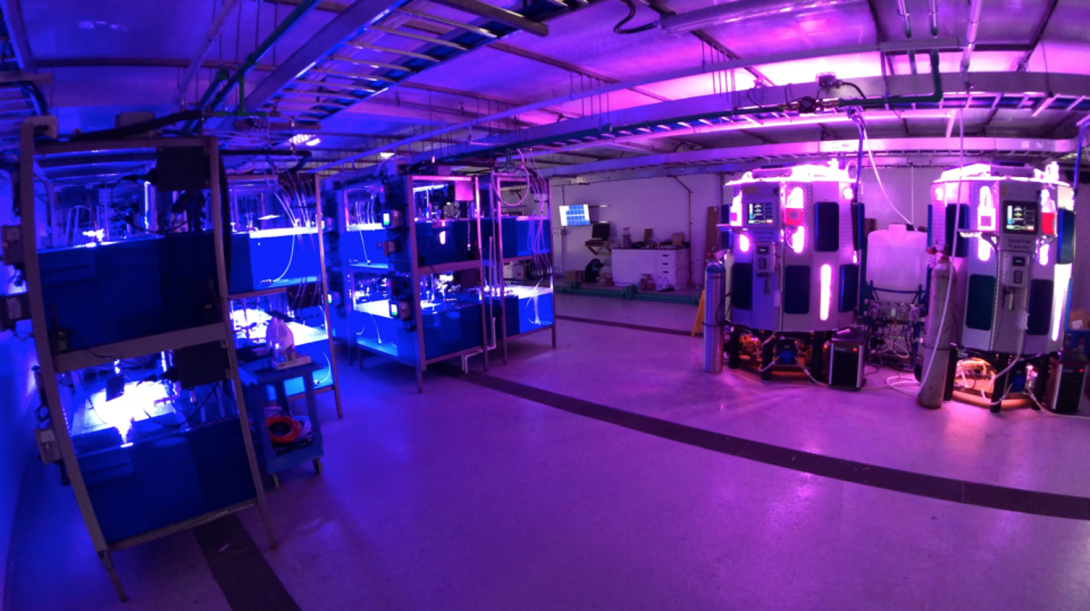
To explore these connections, Suttle’s team took part in a collaborative, multi-institutional study, acquiring Pacific oyster spat (the juvenile life stage) grown at the Deep Bay Marine Field Station of Vancouver Island University and conducting experiments at the Hakai Institute Marna Lab on Quadra Island, British Columbia. The researchers placed the oysters in tanks filled with water from their natural environment in the Strait of Georgia, sampling from both surface water and deep-ocean water where sunken organic matter is decomposed in order to expose the oysters to a diverse array of microorganisms. They then adjusted the temperature or acidity of the water in each tank and, after three weeks, analyzed the composition of the oyster’s microbiomes.
To get a complete picture of the microbiome, the researchers extracted genetic information to identify both prokaryotic microbes and more elaborate eukaryotic microorganisms. Obtaining eukaryotic microbiome data has been challenging because the genetic profile of the host organism is included within — and typically dominates — the eukaryotic genome. To address this problem, research associate Kevin Zhong used CRISPR-Cas gene editing technology to cut the oyster’s DNA, removing it from the analysis and leaving behind the eukaryotic microbiome genes of interest. “We measured the relative abundance of each microbial species, and then performed bioinformatic and statistical analysis to determine how factors such as water temperature and acidity affected the oyster microbiome,” Zhong said.

The team observed that the composition of the oyster microbiome stayed the same even as the surrounding water became more acidic. The makeup of the microbiome did shift in response to increased water temperature, but these changes did not yield any negative health effects. “One of the most surprising parts was that we pushed the oyster spat much harder than they would ever be pushed in the natural environment, and they were incredibly resilient and never showed any signs of mortality or catastrophic collapse,” Suttle said.
While rising water temperature and acidity don’t appear to be directly responsible for Pacific oyster die-off events, the effects of shifting environmental parameters can intersect to wreak havoc in the uncontrolled ocean. As certain bacteria thrive at higher temperatures, warming oceans can introduce new pathogens into Pacific oyster habitats. And if increased temperature disturbs the oyster microbiome as it did in the researchers’ experiments, the oysters may be more susceptible to infection and disease. “The Anna Karenina hypothesis is the idea that once you start to lose your stable microbiome, then it becomes chaotic and unpredictable and you don't know what pathogens will invade,” Suttle said.
The team is now focused on identifying marine pathogens that are being driven north by climate change and mapping the relationships between pathogen distribution, ocean conditions, and the Pacific oyster microbiome and mortality. “The saying is that everything is everywhere, and the environment selects,” Suttle said. Whether within an underwater ecosystem or inside the oyster itself, “If you change the environment, you change the organisms that are present.”