


As a new assistant professor, Whitman will explore how fires affect microbe-driven carbon cycling in soil.
By Sarah Anderson, PhD
Thea Whitman has spent a lot of time playing in the dirt. Growing up with the Bay of Fundy and the Acadian forest of rural Nova Scotia as her backyard, she developed a natural sense of care and concern for the earth. “Even as a kid, I remember being worried about sustainability, overconsumption, and climate change,” she said.
With such an innate interest in protecting the planet, Whitman did not so much choose environmental science as it chose her. She earned her undergraduate degree in environmental biology at Queen’s University in Ontario, and then, seeking a specialization at the intersection of compost studies and climate change, pursued her master’s and PhD degrees in soil science at Cornell University in New York.
Her graduate school research focused on a carbon management strategy in which organic matter in soil is intentionally heated in the absence of oxygen, transforming it into what’s known as biochar. Biochar breaks down more slowly than fresh organic matter, enabling soil-derived carbon to remain trapped underground rather than returned to the atmosphere in the form of greenhouse gases.
As Whitman studied how carbon is consumed, converted, and released through biochar production, she came to appreciate that microbes are the drivers of key biogeochemical processes in soil. She also began to consider the ways in which fire from a natural disaster could have the same effects on soil as fire from a prescribed burn. “Above ground, we have a solid understanding of what happens to plants and vegetation after a wildfire, whereas the fire ecology framework for the soil microbial community is much less well established,” she said. “There are all sorts of interesting questions about what happens belowground as well, in terms of carbon stocks after a fire.”
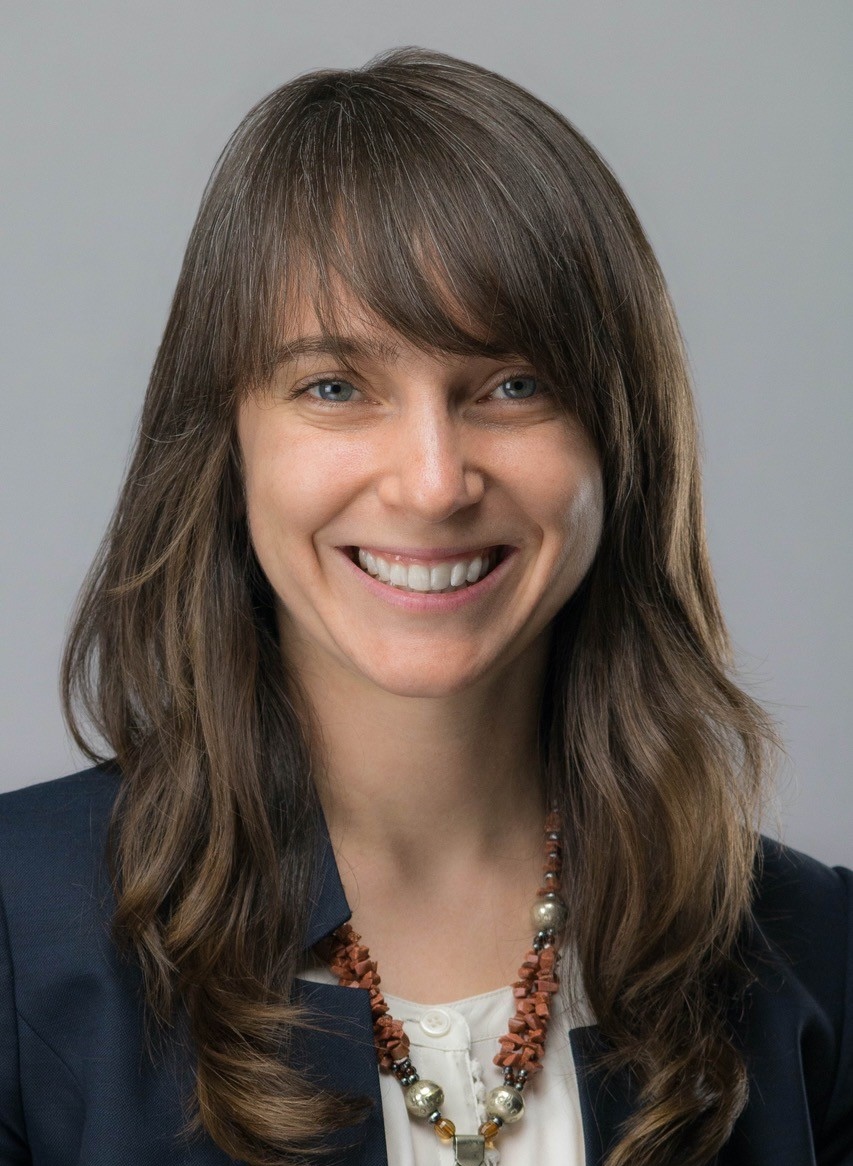
To tackle these questions, Whitman launched her career as an independent investigator at the University of Wisconsin-Madison. Her research explores microbial degradation and carbon cycling in the context of pyrogenic, or fire-affected, organic matter in soil. When burned, organic matter undergoes chemical changes that make it less available as a food source for microbes, who munch on this material and breathe out carbon dioxide and methane. Therefore, like biochar, pyrogenic organic matter decomposes slowly and keeps carbon sequestered in the soil.
While soil-stable pyrogenic organic matter prevents carbon from entering the atmosphere short-term, it also resembles charcoal that serves as fuel for a barbecue. With many regions of North America experiencing increasingly frequent wildfires, Whitman’s team is asking what happens to that combustible matter in a future fire depending on how far underground it’s buried. They’ve found that re-burning pyrogenic organic matter directly releases its stored carbon— and that its ashen remains are actually more prone to microbial degradation, leading to additional carbon emissions. “It’s a double whammy of depleting what would have otherwise potentially been a persistent carbon stock,” Whitman said.
To probe these dynamics in finer detail, Whitman’s team is investigating how wildfires affect the way microbes ration the carbon they consume from organic matter — specifically, how much they use to drive their growth and metabolism versus how much they breathe out as gas.
In a recent study, the researchers evaluated this parameter, called carbon use efficiency, in response to a simulated boreal forest fire. They used a mass loss calorimeter to deliver highly controlled, wildfire-representative heat flux profiles to soil samples they collected from Wood Buffalo National Park in Alberta. “You can make a fire or heat something or pop it in the oven, but your results will not be ecologically relevant if the fire that you're simulating in the lab doesn't reflect real-world conditions,” Whitman said.
Using this sophisticated experimental approach, the researchers found that the soil microbial community displayed a clear difference in carbon use efficiency before and after the burn, although they aren’t yet sure why. “Did the fire make the environmental conditions more stressful for the microbes in a way that influences how they use carbon? Or did it selectively kill off a subset of microbes or create a niche for another subset to thrive, and the new microbes have different carbon use efficiencies?” Whitman said.
She hopes that further untangling how and why fire changes microbes’ carbon use efficiencies will help to refine biogeochemical models of Earth’s carbon cycle. Data on carbon usage for unburned and pyrogenic organic matter will provide critical inputs for the soil portions of these models, enhancing scientists’ ability to track and forecast global carbon emissions.
“What motivates the core of what we do is concern about climate change and understanding how microbial processes in soil contribute, and how that might help us mitigate or adapt to climate change,” Whitman said. “It’s also just interesting to be asking these fundamental ecological questions about soil microbes, and it’s fun to work outside and dig in the soil.”
Whitman is excited to be back on Canadian soil, where her passion for the environment was first realized. She looks forward to spending time with family located in the Vancouver area, and she is also seeking local opportunities to play the violin with new friends. Classically trained but having joined a band in Madison that primarily played covers of Grateful Dead songs, she is open to (almost) anything.
At UBC, Whitman is eager to engage with the interdisciplinary fire research community and to work alongside some of the leading minds in microbiology. “My route to microbiology has been through soil science, biogeochemistry, and environmental biology,” she said. “So, I'm really excited about what I'll be able to learn from my colleagues here, and I hope that working in a department focused on microbiology and immunology will stretch my research in new directions.”